

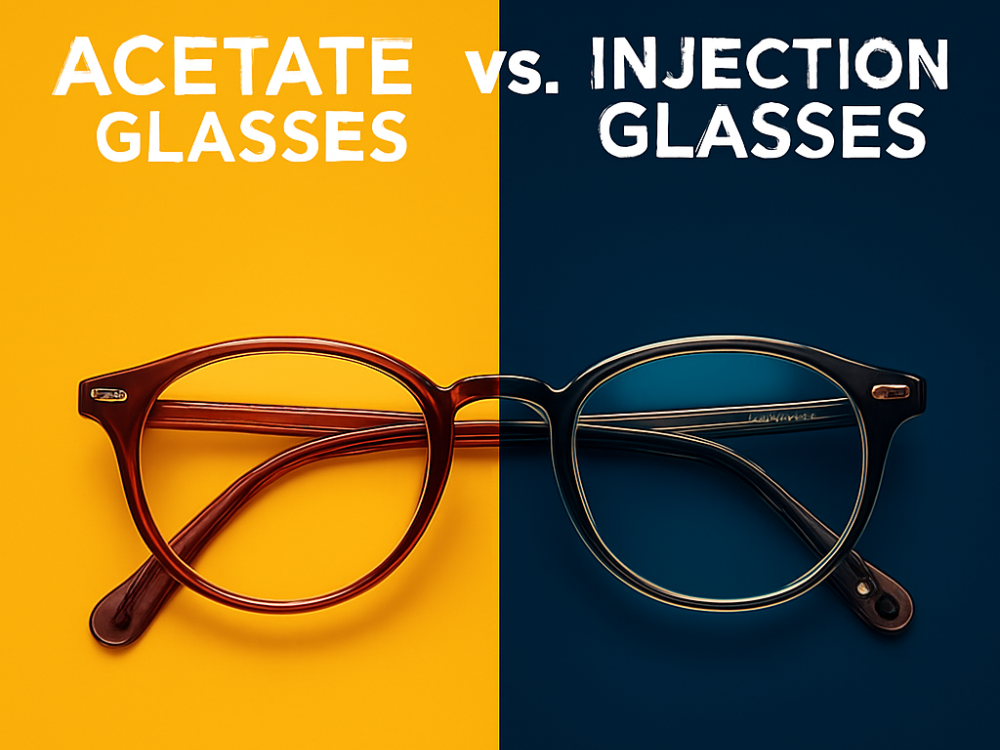
In the world of professional eyewear manufacturing, choosing the right material is the most critical decision a brand owner can make. If you are browsing through high-end optical boutiques or wholesale catalogs, you will frequently encounter two dominant manufacturing methods: Handmade Acetate and Plastic Injection Molding.
While they may look similar from a distance, the differences in durability, aesthetics, and manufacturing costs are vast. As a premier eyewear manufacturer based in Wenzhou, Fansi Optical is here to break down the science behind these materials to help you make an informed choice for your next collection.
What is Cellulose Acetate?
Cellulose Acetate is a plant-based plastic derived from cotton linters and wood pulp. Unlike petroleum-based plastics, it is a high-quality, non-petroleum material that is hypoallergenic and eco-friendly.
At Fansi Optical, our acetate frames are “handmade.” This means the frames are cut from solid, multi-colored sheets of acetate using precision CNC machines, then tumbled in wooden barrels for days and hand-polished by skilled artisans to achieve a deep, mirror-like luster.
The Advantages of Acetate
- Infinite Color Depth: Because acetate is made in sheets, manufacturers can create complex layers, tortoiseshell patterns, and “crystal” effects that have incredible visual depth.
- Adjustability: Acetate has “memory.” An optician can gently heat the frame to adjust the temples to fit a customer’s face perfectly.
- Durability & Feel: It feels “warm” to the touch and is significantly more durable than cheap plastics. It won’t become brittle over time.
- Hypoallergenic: It is gentle on the skin, making it the standard for premium and luxury eyewear.
What is Injection Molding?
Injection molding involves melting petroleum-based plastic pellets (such as TR90 or PC) and injecting the liquid into a pre-designed metal mold. Once cooled, the frame pops out in its final shape.
The Advantages of Injection Molding
- Massive Production Speed: Thousands of frames can be produced in a single day.
- Low Unit Cost: Due to the automation, the cost per frame is significantly lower than handmade acetate.
- Lightweight: Materials like TR90 are incredibly light and flexible, which is ideal for sports eyewear.
The Head-to-Head Comparison
To help you decide which material aligns with your brand positioning, refer to our comparison table below:
| Feature | Handmade Acetate (e.g., Fansi CSA Series) | Plastic Injection Molding |
| Base Material | Plant-based (Cotton/Wood pulp) | Petroleum-based (Plastic) |
| Manufacturing | CNC Cutting + Hand Polishing | Liquid Injection + Spray Painting |
| Visual Quality | Rich, layered, high-gloss luster | Uniform color, requires spray paint |
| Durability | High; resistant to aging | Moderate; can become brittle |
| Adjustability | Easy to adjust with gentle heat | Difficult; often snaps if bent |
| Initial Cost | Higher (Due to labor and material) | Lower (High mold cost, low unit cost) |
| MOQ Requirements | Flexible (Ideal for boutique brands) | Usually very high (to offset mold costs) |
The Verdict: Which Should You Choose?
Choose Acetate if…
You are building a premium or designer brand. If your retail price point is above $80, your customers expect the weight, texture, and adjustability that only handmade acetate can provide. It is the gold standard for “luxury” and “artisanal” eyewear.
Choose Injection Molding if…
You are targeting the mass market, promotional items, or specialized sports gear. If your primary goal is the lowest possible price for high-volume distribution, injection molding is the most efficient route.
Why Partner with Fansi Optical for Your Acetate Collection?
At Fansi Optical, we specialize in the “Art of Acetate.” Our factory in Wenzhou combines modern CNC technology with traditional hand-finishing techniques.
By choosing our Acetate Series, you benefit from:
- Premium Sourcing: We use high-grade acetate that ensures long-term color stability.
- Artisanal Polishing: Every frame undergoes a 50-hour tumbling process followed by professional hand-buffing.
- Low MOQ for Startups: We help new brands launch their debut collections without the burden of massive inventory.
Conclusion
The material you choose defines your brand’s identity. While injection molding serves a purpose for utility, Cellulose Acetate is the only choice for brands that value craftsmanship, sustainability, and style.
Ready to elevate your eyewear brand? [Contact Fansi Optical today] to request our latest Acetate Collection catalog and see the difference quality makes.